
Nile Pioneers · · 2 min read
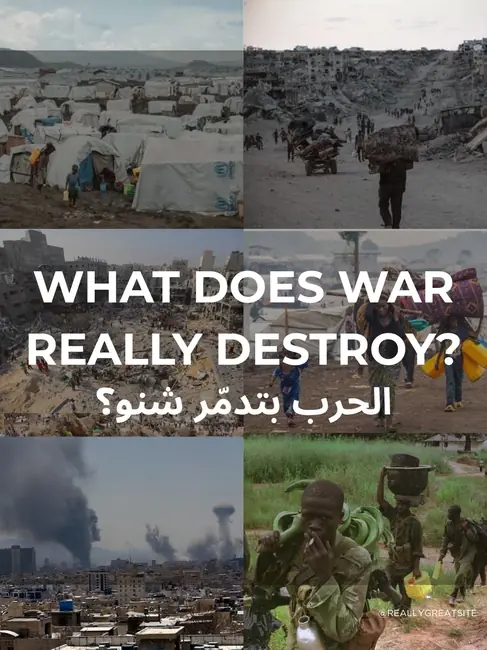
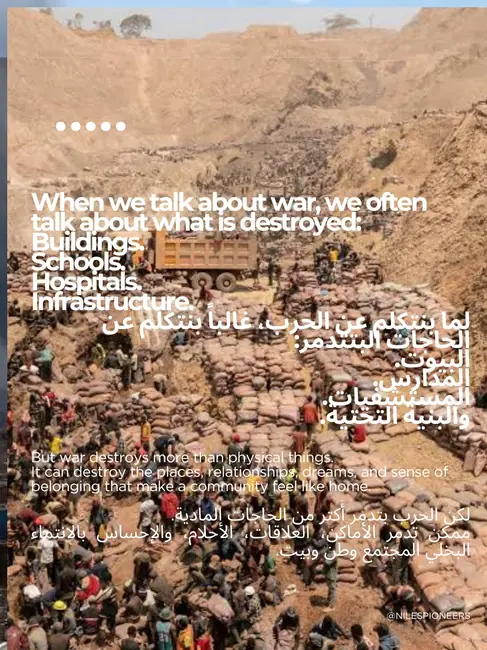
When we talk about war, we often talk about what is destroyed: buildings, schools, hospitals, infrastructure. But war destroys more than physical things. It can destroy the places, relationships, dreams and sense of belonging that make a community feel like home.
Communities
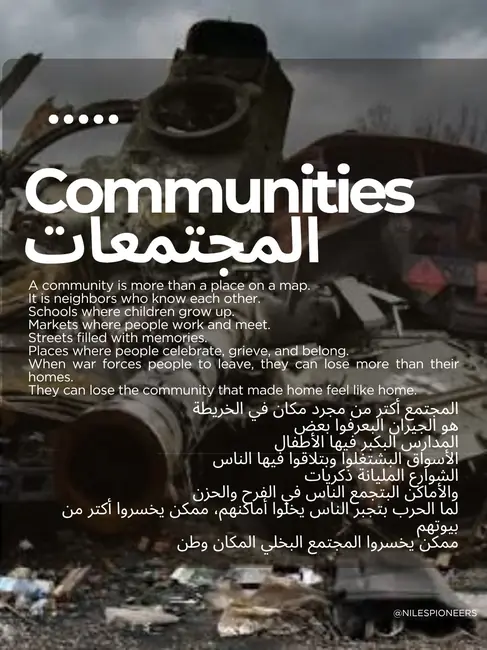
A community is more than a place on a map. It is neighbours who know each other, schools where children grow up, markets where people work and meet, streets filled with memories. When war forces people to leave, they can lose more than their homes. They can lose the community that made home feel like home.
Dreams and the future
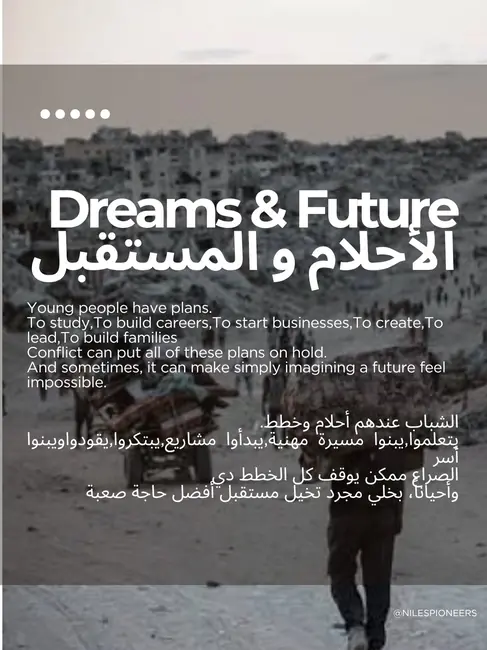
Young people have plans: to study, to build careers, to start businesses, to create, to lead, to build families. Conflict can put all of these plans on hold, and sometimes it can make simply imagining a future feel impossible.
Belonging
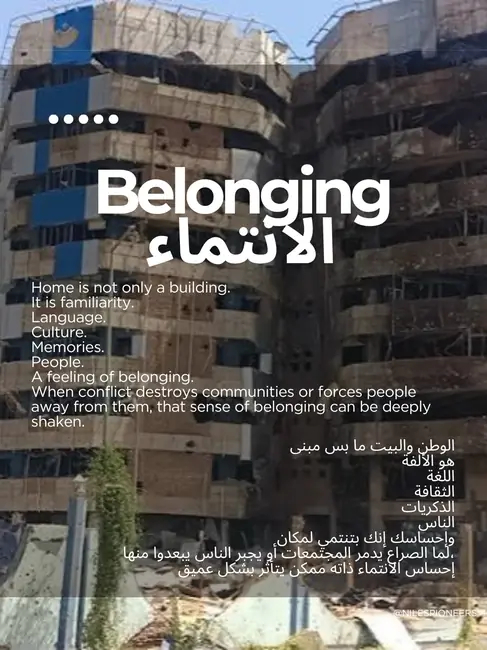
Home is not only a building. It is familiarity, language, culture, memories, people: a feeling of belonging. When conflict destroys communities or forces people away from them, that sense of belonging can be deeply shaken.
Families
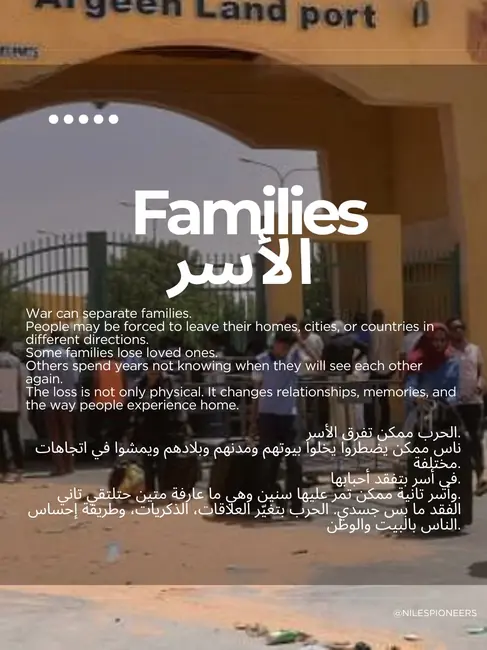
War can separate families. People may be forced to leave their homes, cities or countries in different directions. Some families lose loved ones; others spend years not knowing when they will see each other again. The loss is not only physical. It changes relationships, memories and the way people experience home.
What remains?
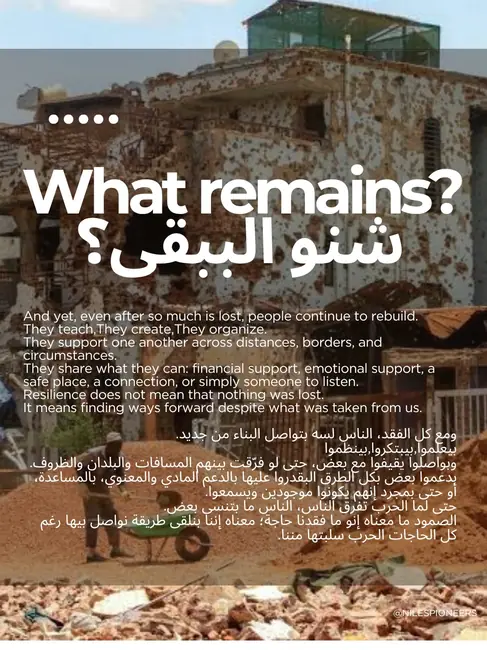
And yet, even after so much is lost, people continue to rebuild. They teach, they create, they organise. They support one another across distances, borders and circumstances. Resilience does not mean that nothing was lost. It means finding ways forward despite what was taken.
What can we do?
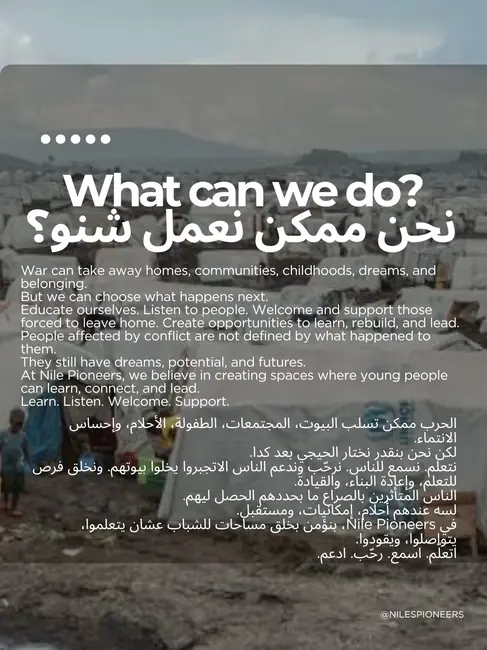
War can take away homes, communities, childhoods, dreams and belonging. But we can choose what happens next: educate ourselves, listen to people, welcome and support those forced to leave home, and create opportunities for them to learn, rebuild and lead.
At Nile Pioneers, we believe young people from conflict-affected communities should have the chance to learn, connect, lead and take part in shaping their own future.
Learn. Listen. Welcome. Support.